As part of my husband and my preparations to move abroad, interviewed a friend about how it is to live in Amsterdam.
Started working actively to get labour union representation at my work.
Started doing weightlifting regularly at a gym.
Intensified my studies in leadership and applied them in my work.
It's almost as if I've gotten a huge drive to prove to myself and others that I am more then just a baby carrier. Not that the world outside my closest friends and family have noticed. The first questions to me are "How many weeks has it been?" or "Aren't you excited about a new tiny person coming in to your daily life?!" My response is "Fourth month and no not really, it's something that going to happen in the future and I'm excited about things I'm doing right now".
Who counts in weeks in their daily life anyway? What people want to actually know is if you've stopped puking and if it's ok for them to comment about the size of the belly or not.
I am seeing many parallels of my pregnancy to how it was to move to a new country as a hidden immigrant. (For those who don't know what a hidden immigrant is, you can find it here) I see the constant social insecurity that arises when I respond in a non-typical way to standard questions and I recognise my own frustration and fear in not being able to show who I really am because of the social construct of what is expected of me.
Facing these issues is something I haven't needed to do for a while but it does help that I've done it before. The added benefit of knowing what worked and what didn't makes groping around in this new set of social constructs more methodical and hopefully less painful for both parties.
I want to finish off with a sculpture that I feel speaks strongly to me. Bruno's own interpretation is that the statue represents that every traveller leaves behind a part of themselves when they leave home.
For me I see it as a reminder that we never see more than a portion of each person we meet. There is so much more to a person, some of which we will never be able to comprehend. Being aware that I do not have the whole picture is a great reminder to not jump to conclusions, and actually listen to what the person is saying.
Those of you who know me, know that I have an unusual hobby. That hobby is reading and rewriting CVs and personal letters. The process usually goes like this:
Friend: Hey, do you think you could take a look at my CV? Natalie (internally): OMG OMG I get to read another CV. OMG OMG THIS IS SO AWESOME! Natalie (to friend): Yeah, sure! Send it over and I'll have a look at it tonight.
Later that evening.
Natalie (to friend after scrupulously looking at every detail) : Yeah, so I had a quick look and just have a couple of questions - sends a long list of questions. Friend(internally): Oh God, what have I gotten myself into?
Some background to my hobby. When we moved back to Sweden we were pretty much starting fresh. We had few people that we knew and we knew little about integrating to the Swedish way of life. This meant that when I was 15-16 my classmates were getting summer and part-time jobs through their friends and family while I didn't even know where to start. Then one day during my usual boring English lessons we got to write CVs. I remember what the English teacher said if it was yesterday:
"If you want to find a job outside Sweden you have to have an English CV. You have to be able to present yourself professionally to a culture you don't know."
Suddenly it was clear that this is what I needed to reach the Swedish working world. A tool that I didn't know existed was suddenly handed to me and I went nuts. I sent my CV to every job at Arbetsförmedlingen that I thought I had the slightest chance for. I would go to companies asking to see the manager so I could hand over my CV to them. The result of all my hard work? Nothing. Zilch. Nada. I was never contacted by any of the companies that I sent my CV to.
I had been handed a hammer but forgotten the nail. My personal letter used to be a standard short note just specifying the skills that I was good at. I realised that I needed help from a professional Swede. Half a year of my dad reading and criticising my personal letters to pieces finally paid off. I got a part-time job as a tele-marketeer, selling audiobooks. I hated it and held on for 3 months - enough to save up for my first laptop.
Even though I hated this first job it gave me an understanding of the importance of presentation. We had a script that we were allowed to rewrite and change to optimise for the best selling tactic. I used what I learnt and tried to apply it to my application process. I started reading articles of how to write the best applications and asking people to read my CV. More importantly I asked them to send me their CV so that I could actually see their presentation.
The best understanding I got of writing CV's was by looking back at the applications that had gotten to an interview. By comparing the job ad, the personal letter and CV I started see patterns of how they work together. This realisation was so cool that I want to understand more.
So that is why I get this super-excited feeling when I get another CV on my table. I get to apply my years of job application experience at it while at the same time better see the patterns that evolve from the process. But the best feeling ever is actually hearing the results (Thanks T! 12 hours - that must be the quickest turnaround of an job application to job that I've been part of!)
I am slowly trying to get used to Apple. The new work computer is a Macbook so for the past week I've been trying to get the hang of how things work and all the shortcuts. My approach has been to use the computer as much as possible in the most usual everyday activities, like writing, surfing and coding.
So far these are my major likes and dislikes with the Mac.
So I have had my blog for some time and, being a Data Analyst, the most fascinating aspect of having a blog is the data it generates.
So as I'm sure all of you are as interested in stats as I am I thought I would share some of statistics.
First of all, I like see how people actually find my blog. Do they come through Facebook? Google? Other? I want to identify the channels that are mainly generating hits to my blog. I added my blog to Google Analytics in August 2013 so it is now possible for me to see how it has developed over time.
The sources are divided in to 4 main groups;
Organic Search - Googling, Binging and the like
Referral - Links from other websites not classed as Social
Direct - Direct links the blog or links that are not tagged
Social - Links from Social sites such as Facebook, Twitter, LinkedIn, etc.
So looking at the statistics, it shows that Organic Search has slowly increased over time.
This is also understandable as when there is more content on the blog, there is more that can be searched. I was expecting to see some sort of delay effect in the Organic Search as it takes a while before Google actually properly indexes pages but it is not visible The top deliverers over time has, of course, been the Social channel as I have mainly used this channel to get my blog out on the wide web.
The next thing I wanted to check was what keywords is my blog showing up on searches? Well below you can see the top 30:
I especially like the "moose antlers". Not really sure why that is so popular. *J and K, I'm looking at you!*
Finally it's quite interesting to see where in the world people are coming from when visiting my blog
I must say I am disappointed that there are none in Greenland who are interested in my blog.
I still get annoyed at the Swedish Migration department when I re-read this one. That the Swedish departments can be so narrow-minded that they cannot even think of the simplest help for the people they have contact with.
This was my first post that caused a stir. I have not changed my views and it was definitely interesting to read the comments that came up when posting it on Social media.
This post has been on my most popular post list ever since I published it. I have used the responses when I have received the jabs about gaming with great success.
Words are about creating pictures or ideas in other people's heads. When trying to engage other people you will pull from your own experiences and try and describe situations in words that will make sense to the other person.
This can be difficult when two people have not had similar experiences. I remember trying to describe the concept of a library to one of my Turkish friends who had never been outside the town she lived in.
But the problem of incomprehension is not the only obstacle. Words have amazing power and each person will attach experiences, pictures, and even emotions to the words. This is made abundantly clear when speaking with multi-lingual people.Suddenly everyday phrases can take on a whole new dimension when seeing the person's look of surprise, horror or confusion. Some examples:
"I went for a lovely long jump last night."
Overhearing a teacher shouting "DIE!!" to the students.
When an expecting mother who decides to share her news exclaims "I'm embarrassed!"
It doesn't matter how well you know languages, you will always have a stronger connection to a sound in one language than in another. This makes the brain leap to conclusions before it has time to evaluate which language the other person is speaking in. In the above cases:
"Spring" is the Swedish word for run. The same word means "jump" or "bounce" in German.
"Die" means "Enough" is Hebrew.
The word for pregnant in Spanish is "embarazada"
When learning languages you need to spend time working out which pictures/ideas/emotions to connect to the sounds. When there already exists emotions connected to the sounds you are hearing, it becomes harder to break or expand the bonds.
I still smile when I'm driving around Sweden and see the signs below. It's not very helpful as I probably take the speed bumps at a higher speed than I should, having attached a happy emotion instead of a careful emotion to the word.
And for those who are as fascinated by data visualisation as I am, Small World of Words is a cool website showing what word association people have and comparing how it differs to a standard Thesaurus.
I stare at the blank page that is placed in front of me when I click on "Create new post". Just before I had a multitude of ideas swirling in my head. Thinking that if I just sit down and start writing I'll be able to get some order to them I opened a page. They disappear. And it's not the first time. The feeling of seeing an empty page and the inability to be able to write down what was in your head is depressing to say the least.
I am not talking about writers block. I have constant moments in my everyday life where I'm thinking, "I should write about that" or "that is an interesting topic". But they will hide away when I am placed face first to a page that I am expected to fill.
As I do with all the problems in my life I Google it. Halfway through page two (Yes, I am one of those who will actually look at the second page) I find a blog called "Write to Done" giving a name to this problem. He calls it writer's log jam and I think the name is very appropriate.
My main way of getting out of the jam is to just start writing about what I have done during the day. It almost always leads to tangent subjects that I can then finally get down on paper. I have to agree with Walter Benjamin:
"Never stop writing because you have run out of ideas. [...] Fill the lacunae of inspiration by tidily copying out what is already written." - Walter Benjamin
In the day of copy/paste being a couple of keystrokes (or Alt-E-S-V if you're working in Excel) this can seem outdated. But I take it to heart. Actually sitting and typing away words that have already been written or just writing the everyday happenings of your life gives you a focus and releases the fear of the empty page.
I have just finished binge-watching the first season of Mr Selfridge. It made me take out my old history books and look at the past events in a new light.
I am an advocate of change through talk. That when people understand the issues, they will agree and change and progress will happen. The naivety of this is not lost on me. But there is special point that I want to mention.
Approach anyone with a subject that you are passionate about and that needs change. Be it immigration, EU-election, equality or the environment. Watch how they will listen and squirm. Wishing they were elsewhere. Wishing the subject could change to something safer, such as the lovely new curtains that are hanging behind you.
Or it becomes the other reaction.
"Yes, I agree." and then the shrug. The dreaded shrug. Showing s/he does not believe there is anything I can do. So there is no point in trying or even talking about it.
Where is the debate? Where is the "but what if we did..." ? Where is the "Have you talked with..."? Where is the engagement?
When did the struggle:
turn in to passive acceptance?
Wilful Blindness. Or Wilful Ignorance. I prefer the wording wilful ignorance. The act of intentionally ignoring facts to avoid making undesirable decisions. I see this everywhere. I do it. It is a survival trait.
How can you feel passionate about equality when you need to check up the game score you know will be discussed at the coffee break at work tomorrow and you do not want to be left out. How could you find time to discuss immigrant issues when you have to make sure your house is presentable? I don't have time to recycle, I need to watch latest season of...
I turn to TED, and particularly Margaret Heffernan to put to words what I cannot
"The really important thing about Gayla is she is ordinary. She's like you, and she's like me. She had freedom, and she was ready to use it" - Margaret Heffernan
When I write, I write about things that interest's me and what is on my mind at the moment.
Lately I have had my mind full of work and some pretty awesome development that is going on there. The problem is that when I signed my contract of employment it stated, in short, that I am not allowed to reveal company secrets.
What are and what are not company secrets can be discussed but the main issue here is that there is now another filter that I subconsciously think about when I write. And this brought up another subject that interests me - self-censorship.
Self-censorship on Facebook
A few weeks ago while I was browsing, I stumbled across a research paper concerning self-censorship on Facebook. The focus in this paper was on last-minute self-censorship. That is to say when you start writing in the status bar on Facebook, but then decide not to post it. It was published by Facebook themselves (a list of their publications can be found here) and is, as they mention themselves, an exploratory work where the focus is mainly demographic and evaluating basic assumptions. But there is one of the results that I found was especially interesting:
Snapshot from the results section in "Self-Censorship on Facebook"
This correlation between diverse friends and self-censorship was not fully in-line with the original hypothesis that the researchers had. It is not clear which ones causes the other - Do people who self-censor less have a higher tendency of befriending diverse friends or do people who have a diverse friend-base, self-censor less? Either way it is an interesting correlation that I hope more research will be done on.
Personal self-censorship
I am a person that uses social media avidly, maybe because of sheer relief. It is not that I do not know the dangers of gossip and social media. I grew up in an environment where the police would circle our apartment block weekly to check up on the area. It was always assumed that whatever we said to our neighbours it would always find it's way to the police. Once while I was out walking our dog I was brought in to the police station by a friendly policeman and questioned by two-three policemen about my family and life and my parent's work. I was twelve.
My parents were always clear to both my sister and I that it was important to think through what we said. We were always asked to think about how it would be perceived by people who don't go to church, haven't lived in another country or gone to school.
Artwork by Askin Ayrancioglu, faced a lawsuit because the art was objectionable.
This type of lifestyle bred self-censorship like nothing else ever could. Once I got my fingers on blogging and social media it was a relief to me. I could write down my thoughts first and be able to view them afterwards and censor at will before it was visible to everyone. I could take time thinking about what I wanted to share instead of not being able to share anything due to the time-constraint.
Self-censorship at the workplace
In my own experience self-censorship is most prominent in the work environment. I hadn't realised how much I subconsciously self-censor until I had a longer period where my main social interaction had been with my colleagues. The relief of being "myself" when I was with my friends surprised me because I had not been aware that I had been doing anything differently. It made me think back to the different work places I have been at and the level of work-related self-censorship that is noticeable.
Why do we self-censor at work? Apart from the usual reasons to self-censoring it seems we have more to lose making it more important to be careful.
George Orwell's essay on "Politics and the English Language" written in 1946 touches on one of the reasons to self-censorships at the workplace when he writes:
"The great enemy of clear language is insincerity."
Each individual at a workplace have their own incentives and goals. These do not always align 100% with the goals of a company, even though good company management will do their best to build a company structure that aligns them as much as possible. It is therefore important for the individual to be careful of what they say as saying the wrong thing may disrupt the individual's goal.
The second reason I think has to do with communication. When it comes to language and culture, the workplace is a very static place, compared to "the real world" of friends and social media. It is harder for companies to adapt to new cultural and language innuendos usually because change is expensive for a company.
Due to this static state there will arise differences to how people communicate with each other at work compared with how they communicate outside.
A simple example of this difference is just the way communication has moved from email to other systems. Using email is a rare occurrence with my friends as I will use tools such as chat, Dropbox and document sharing programs which I would find more efficient. This switch means that my communication would be more about updates.
I will write a short chat update saying "Filled in the document" and as everyone has access to the same document and are able to see what changes I have done, writing anything else in the chat would be in excess and seen as a nuisance as people get the chat message straight away and just want an update so they know what's happening.
Compare this to an email where it would be important to introduce the reason to writing, to whom it concerns, state the changes that have been made and specify on how to proceed and where the latest document has been saved. It is more important here to get a summary of everything than when receiving a chat message.
This difference in communication ways make you unsure of what will be understood in the correct way. The uncertainty of whether everyone has watched the latest funny video on Youtube makes you careful with making a reference to it. Not being sure if the boss understands the latest modern word, you will go with wording it in a more traditional fashion.
I jump from the tower in to the water 200 metres below and I feel my heart leap in to my mouth and the adrenaline kicking in. I surface gasping and swim to shore.
I'm hiding round the corner of a building to eavesdrop on a conversation. A hand is placed on my shoulder, making me jump and run the computer chair over my husband's feet, who had just come in to ask me if I wanted coffee.
Playing computer games is as much part of my life as reading and I will spend some of my free time in front of "that box", like my farmor calls it. I will lose myself in to worlds, strategies and stories with the universe at my fingertips.
When I entered the grown-up world of the work environment I found that I was constantly questioned about my gaming. Coming from a community where gaming is as accepted as going for fikas, I was surprised at the widespread prejudice, misconception and wariness people have towards computer games outside my community. I want to take some time to answer some of the statements that I have experienced.
"You're just playing to get away from reality"
This is, in some sense true. I also read books, watch TV, go to the movies, write and go on holidays to "get away from reality". Getting away from reality is something that everyone does and this is the reason why. Reality is not the one true thing we strive to experience. Change, innovation and enrichment is what we strive after. Just living in reality will never makes us strive for the impossible, nor make us aware of what we have now. Playing computer games is one of the many ways I dream and enrich my life.
"Why does it have to be so violent?"
I could say that not all games are violent. But that doesn't answer the question. Apart from that, some of my favourite games right now, like Assassins Creed and Dragon Age, are violent. Some of my favourite series and movies, such and Lord of the Rings and Game of Thrones, are also violent. Every day I watch the news and I see riots, attacks and disasters. Just looking historically, violence has played a prominent part in pretty much all aspects of our culture.
Crucifixion of Christ
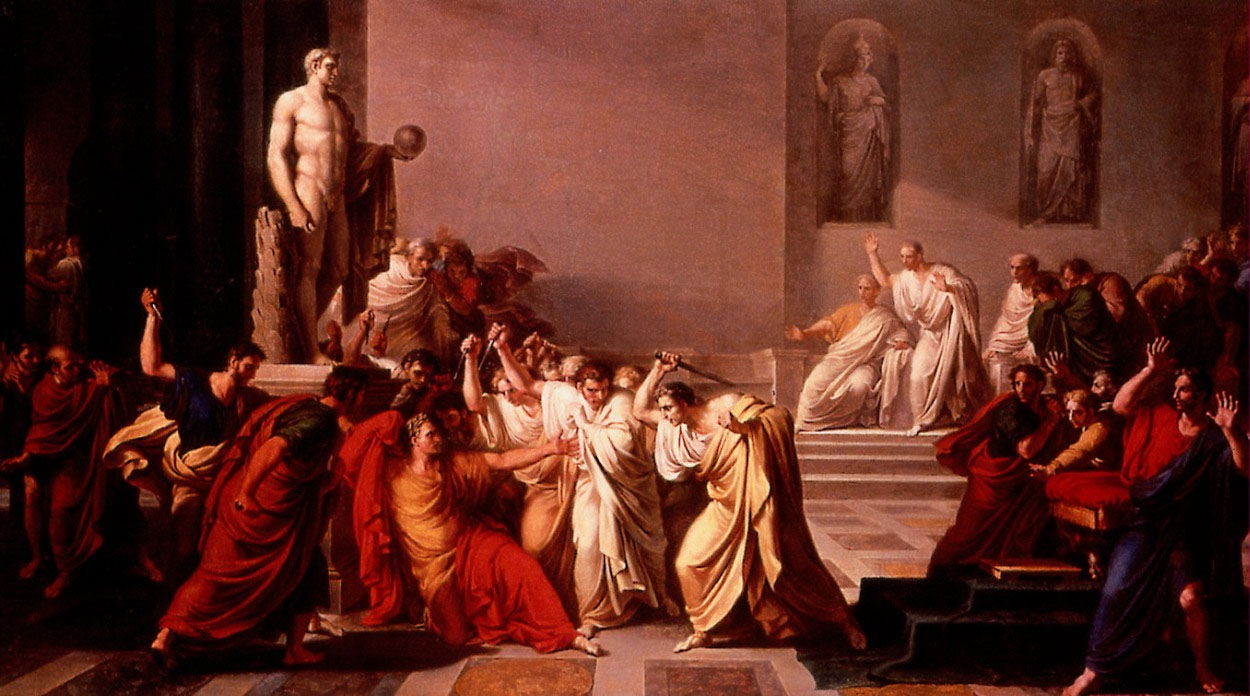
Death of Julius Caesar
Violence has a lot of emotions associated with it, grief, loss, vengeance, anger to just mention a few. This is why it makes both good gaming and filming material. To question violence one should question the reason of why it is in our society as a whole and not only why it is in the game industry. No, I don't like violence. But I don't believe violence can be linked to only to the gaming world. "Why does it have to be violent?" should also be asked to our whole culture, which I don't see is being done to the same degree. I recommend Henry Jenkins blogpost for a more in-depth reasoning around media violence.
"Gaming is not good for you."
This statement is often followed with "You sit all day at work in front of the computer, it's not good to sit in front of the computer all day during your free-time as well".
Gaming, as all types of activities, should be done in moderation. But I am not criticized to the same extent as if I would spend the same amount of time reading as I do gaming. The fact that I could sit in front of the computer 24-7 is not the main argument in these statements.The underlying message that I get from these types of statements is that playing computer games is seen as unproductive and non-developing. And this I would like to dispute. I will now name a couple of popular games and what skills they develop.
Civilization - The two main skills this develops is historical knowledge and strategy. Being a turn-based game, it makes the gamer think carefully each step it does and how it will affect the future development of the game play. To understand how what you do right now affects the future course is a great skill to develop. Used in many areas of the real world from project planning to coding the skill to plan ahead is always useful.
Civilization uses historical figures and you build historical monuments. Understanding the importance of what the pyramids were for the Egyptians or Machu Picchu to the Incans. Also, the possibility to play historical scenarios such as World War II and the American Civil War makes history much more alive then the hours in history class. Minecraft - Creativity is the top skill developed here. To be able to expand your mind from the mere mundane blocks that you can see to imagine what can be created out of them. Youtube is full of videos where people have create the whole of Lord of the Rings world, built a working computer and designed amazing architectural skyscrapers. Some snapshots of some cool pieces can be found here. But I will attach a youtube clip where they have created a jukebox playing the whole Portal - Still Alive song:
Antichamber - Streching your brain to be able to think outside the box. This game focus on the developing puzzle solving skills and rethink the way you perceive things. This isn't the only game in this genre but it is definitely one that has stuck with me as its way of making me see things in a different way is a skill that I have used in the real world as well.
World of Warcraft - Teamwork and Economics. If you don't believe me about teamwork, try communicating with 4+ random people over chat while you are being outnumbered by orcs. This multi player game will really make you realise how each person plays his part in the whole picture. Being able to communicate is key and also to stick to the joint plan. The economics skill is from the auction house in the game. This is where you can sell and buy items from other players. The set-up is like a normal English auction style, and to understand the dynamics of when you get the highest prices, when rare items are sold what is ETS (easy to sell) is a skill which requires the understanding of the community behaviour.
There are all types of different games, each that has different goal. To assume that all games are just toys to pass the time with just shows how out of touch with the gaming world you are.
"Come on, space invaders isn't that great"
Just because the last games that you played was 20 years ago doesn't mean that the gaming industry hasn't evolved. In just the past 10 years the consumer spending in gaming has overtaken the record music industry and the forecast is that it will overtake the newspaper within 5 years (see this article). An industry that is growing like this has spent billions in game development and game play. Game Design has become a science where it analyses what makes people want to play and how do you make a game that makes people want to play more.It is not a fluke that games like Candy Crush Saga become a hit. There are years of research behind many of the most popular games and to actually understand what is out there you need to spend some time playing the new games and not only Solitaire. Which, by the way, is no longer available on Windows 8. Another reason why Windows 8 sucks.
In successful gatherings, there is usually that one person that, when s/he shows up, awkward silences disappear and there is chatter all over the place. The person will usually be a social connector, bringing together people who don't usually hang out together. I like to call these types of people a "Group Catalyst". Their presence will lighten the mood and new ideas and subjects suddenly come to the surface. All that is required from the catalyst is the right nudge, word or greeting.
I used to confuse the catalyst with another type of person that can also be found at social gatherings. I will call them "Group Captivator". A captivator will focus the group's attention on him/herself or thing. and create a central point of interest at the gathering. The captivator can be funny, bossy, silly, outrageous, etc. the main point is that while a catalyst creates ripple effects where everyone in the group is pulled in to contribute.to the mood, a captivator will usually be the sole contributor and once that person stops talks there is no momentum from the rest of the group to carry on the chatter.
So, how do you become a group catalyst? I have often seen these people in different contexts and have been trying to find what it is they do that makes them in to catalysts, and how are they different from captivators. I will now try and list the key aspects that I have found. Please feel free to comment if you have other aspects that I may have forgotten
"Nothing from the old world could enter into the new one. That's how it's always been. I felt there couldn't possibly be enough love, enough friendship in any of us to bridge the gaps, to build back towards each other after graduation and marriage and so much change."
And why should we try and bridge towards each other? What do we have left in common? Our lives are taking different directions so what could we have to talk about? I have killed many friendships thanks to this reasoning. I could no longer see how the relationship could continue in the way it has before so therefore I need to finish this relationship because, in my mind, I could never see how it could develop to something different. As a TCK, I have a tendency of glorifying the past, as that is how I want to remember it. To keep the memory of the friendship and not change it.
This is what I couldn't fathom. That to keep the friendship it was up to the both of us to find a NEW way to continue a friendship. That change doesn't only mean new friendships, it also means new old friendships. And it is hard.
"Because change is hard on souls and because I'd rather not admit all that space and time and life that's built a chasm in between us...and I'd rather not do the work of bridging it all. There's isn't time to anyway. The visit ends quickly and we slip back into our lives as if we'd never been friends."
It took a special friend to show that a friendship can change. That through change, a friendship can grow and develop to something more and something stronger.
As I was always the one who moved away, I assumed that it would be me who changed the most. That I would grow away from my former friendships and they will just carry on in the same way as before and not want to change anything. It took my friend to show that this is not the case. That people change and grow for many different reasons. And most of all, my friend showed me that I need my old friendships. I change, and as a TCK I will adapt to the new situation I am in. But it is my old friends that will point out who I really am. How my decisions are based on my past life and why my history affects me. Changing an old friendship is hard. It is so much easier to leave a friendship how it was then having to apply myself to finding new ways of continuing the friendship. There were awkward silences. There were misunderstandings. There were times where I just didn't have the energy.The friendship isn't as smooth as both of you were used to.
Sometimes you realise that the friendship can't evolve. But when it does evolve, it is worth the hardship.
Last week students who have applied to university programs and courses received the admission decision from the universities across Sweden. Having had a special interest in the mathematics program I decided to do some follow-up on the number of application across some of the universities. First a diagram of total number of applications across the universities, Gothenburg University, Lund University, Stockholm University and Linköping University. These numbers include both applications to programs and courses.
Now the total number of applications to the maths program at the different universities. Please note that Stockholm has 4 different mathematics program, and I have only included the one called "Kandidatprogram i Matematik" as it seemed to be the one best suited to compare with the other universities. Lund has also this year, two separate maths program, called "Naturvetenskapligt kandidatprogram, Matematik (undervisning på engelska)" and "Naturvetenskapligt kandidatprogram, Matematik" which I have counted as one program, with the only difference is seemingly the language.
I then weighted the number of applications to the Maths program with the total number of applications to the university:
Linköping is doing well with the number of applications, but what I really want to get my hands on is some drop-off numbers, that is to say, the number of students who don't complete the program. I would like to see if the drop-off numbers are decreasing, and also how the other universities are dealing with drop-off's from their programs... If anyone knows how to get their hands on that information, please contact me :)
Surfing on the "Economist" I stumbled across an article concerning the classification of how harmful drugs are. The ranking shows that alcohol is seen as the most harmful drug in the UK followed by heroin, crack cocaine and methamphetamine. It is a graph that I have seen before and is also been used in arguments concerning legalization and drug classification.
The article mentioned that the ranking is done by "drug harm experts". And this is something that made me look more critically at the ranking First of all, who are these "drug harm experts" and secondly, in what way have they ranked these drugs? I went to the source of the article, which is the Lancet and the article can be found here. (I had to sign up to be able to view the whole article).
I found out that the group of "drug harm experts" were members of the Independent Scientific Committee on Drugs and two invited specialists with knowledge in legal highs. I could not find how many people were in this group.
The analysis was done in a 1 day session where everyone discussed and ranked 20 drugs in accordance to 16 different criteria that had been decided upon earlier. Below are the 16 different criteria that is taken from the Lancet article.
Panel 1
Evaluation criteria and their definitions
Drug-specific mortality
Intrinsic lethality of the drug expressed as ratio of lethal dose and standard dose (for adults)
Drug-related mortality
The extent to which life is shortened by the use of the drug (excludes drug-specific mortality)—eg, road traffic accidents, lung cancers, HIV, suicide
Drug-related damage to physical health, including consequences of, for example, sexual unwanted activities and self-harm, blood-borne viruses, emphysema, and damage from cutting agents
Dependence
The extent to which a drug creates a propensity or urge to continue to use despite adverse consequences (ICD 10 or DSM IV)
Drug-specific impairment of mental functioning
Drug-specific impairment of mental functioning—eg, amfetamine-induced psychosis, ketamine intoxication
Drug-related impairment of mental functioning
Drug-related impairment of mental functioning—eg, mood disorders secondary to drug-user's lifestyle or drug use
Loss of tangibles
Extent of loss of tangible things (eg, income, housing, job, educational achievements, criminal record, imprisonment)
Loss of relationships
Extent of loss of relationship with family and friends
Injury
Extent to which the use of a drug increases the chance of injuries to others both directly and indirectly—eg, violence (including domestic violence), traffic accident, fetal harm, drug waste, secondary transmission of blood-borne viruses
Crime
Extent to which the use of a drug involves or leads to an increase in volume of acquisitive crime (beyond the use-of-drug act) directly or indirectly (at the population level, not the individual level)
Environmental damage
Extent to which the use and production of a drug causes environmental damage locally—eg, toxic waste from amfetamine factories, discarded needles
Family adversities
Extent to which the use of a drug causes family adversities—eg, family breakdown, economic wellbeing, emotional wellbeing, future prospects of children, child neglect
International damage
Extent to which the use of a drug in the UK contributes to damage internationally—eg, deforestation, destabilisation of countries, international crime, new markets
Economic cost
Extent to which the use of a drug causes direct costs to the country (eg, health care, police, prisons, social services, customs, insurance, crime) and indirect costs (eg, loss of productivity, absenteeism)
Community
Extent to which the use of a drug creates decline in social cohesion and decline in the reputation of the community
ICD 10=International Classification of Diseases, tenth revision. DSM IV=Diagnostic and Statistical Manual of Mental Disorders, fourth revision.
I am sure that these experts all have great knowledge of drugs and have read a lot of the different effects drugs have on people. But I am sceptical that they have all the numbers memorised to be able to make correct assesments within one day. What I wonder is, is it really possible to do enough research and discussion in one day to rank 20 drugs on one criteria, let alone 16?
I am not the most up-to-date when it concerns new releases. Today Facebook had a little pop up that said something about "Graph Search". Anything with the word graph in it always gets some extra interest from me, and especially when it concerns social media. I therefore start reading up of, what is to me, something I was completely unaware of.
Yesterday, Facebook released its new search engine "Graph Search" for the US users which they've been working on since January. I am, of course, dying to try it out. As I can't, I will have to make do with reading reviews, comments and privacy issues that concerns this. As expected there are many articles concerning "Facebook should..." or "To compare with Google..." or "Once again Facebook is having problem with privacy..." but I want to lift the main things that I found interesting.
Let us start with the source, Facebook's own information about Graph Search. The focus lies on finding information that your friends also are interested in. This covers things like travel, pictures that you tagged in, pictures in a certain area, friends check-in's but what I find most interesting is that there will now be the possibility of finding friends with similar interests and an easier way of finding past posts that you have liked. This is something I felt has been missing from the beginning. There are many times there has been a post that you've liked and then after a couple of months it's impossible to find.
The New York Times has a longer article where it also states that Facebook is also working on integrating third party applications in to the search. This means it will (hopefully) be possible to search for what your friends have written for reviews on Tripadvisor, or what friend of friends enjoy on Goodreads, Spotify or Pininterest.
And this is what I believe will be strong point. It is not about replacing Google as a search engine, it is finally incorporating all the information that is available out there about friends, local events and activities and be able to get the information that is relevant for you at a local level.
Yesterday we went and ate at a place called Kryp In in Gamla Stan, and it was super delicious! I didn't even have enough room for the amazing desert so I had squirm uncomfortably and just look at the half eaten wonderful cheesecake-in-a-jar that was trying to tell me "It's ok, just eat me! Don't bother about what your stomach is telling you!"
Cheesecake-in-a-jar
As the dinner was to celebrate our anniversary, we tried to remember all that has happened this past year. For some reason one always forgets how much has happened. Within a year we have:
Moved twice
Traveled abroad twice
Been to a wedding
Looked for and bought an apartment
Negotiated with banks
Learnt to play Magic
This brings my total score of moves to 15, according to my Facebook profile.
There was a large group of Americans at the restaurant who were also talking very loudly about politics and especially about the question concerning abortion. This also became a topic for Matte and I to talk about. In Sweden abortion is not a very controversial issue. The law in Sweden is that the women may have an abortion, for any reason, up to the 18th week and after the 18th week there need to be special reasons and permission from Socialstyrelsen.
Both Matte and I are pro-choice when it comes to abortion but that does not mean there were views and issues to talk about. Some questions we did talk about was
"Is it better with no life than a hard life?" "Does a mother have the right to decide that for a child?"
"Is it irresponsible for a mother to keep a child if she cannot properly take care of him/her?" What responsibilities does a mother have to herself, her child and society?
"If the new child risks the life of children already born, should the mother raise all of them at the risk of all of them dying prematurely (due to hunger, for example) or have an abortion to ensure that the ones already born can live safely?"
The last question above induced the more philosophical questions:
Is two "ok" lives better than three "hard" lives?
Is one "good" life better than two "ok" lives?
Tough questions and we didn't come up with any answers, but it was very interesting to talk about...
The PewGlobal recently published an article about a poll conducted in several countries and where they have concentrated on the European Union. Now I love statistics, and although I have little trust in surveys, preferring cold hard facts, I love the graphs that can be generated from the answers. My favourites in this article, are one concerning Leadership role and Stereotypes.
The graph above concerns what people think about whether their own leader has done a good job in dealing with the economic crisis. In all the countries excepting Germany, the percentage is below 40 making it visible that there is little trust from the citizens in how they believe their own leaders has handled the situation. Whether that is the case is, of course, not possible to determine as this is as survey that measures what people think. What people think is not always the same as what is the fact.
Now what I like is the next graph that takes the though one step further in the leadership role. People are not only asked whether their own leader does a good job with handling the crisis, they are asked if Merkel, Hollande and Cameron have done a good job with handling the crisis.
In all countries except Greece, they give Merkel a higher mark then their own leader, and both Hollande and Cameron has had a positive trend where only 2 countries have given their own leaders a higher score.
The graph below is my absolute favourite. It concerns what people think about each other which is always of interest to me. I will leave the graph to speak for itself as I believe most people will love to delve in to the different meanings it could have.
I will also post last years survey about the Stereotypes, The headings are different but are still fun to compare with.:
I did a quick search to see if I could find anything about Sweden's stereotypes but could not find anything. If anyone has any information on where I could get hold of that, you are very welcome to contact me.
After seeing many of my friends sharing the page http://trettiotreanledningar.com/ and getting in to a discussion with my husband, I started to look into both the many superficial and incorrect statements behind these "33 reasons" and the actual meaning of the word feminism.
One of the main reasons I dislike the "33 reasons" posts and similar graphical statements like it is that there are so many statements there that are not confirmed truths but twisted words of what people take as the truth and omissions to simplify a complex problem.
Take, for example, Reason 31. "Three men are cleared from rape". I have spent 10 minutes searching the internet for the actual ruling in this case. I have not found it. Instead I have found several articles saying "Boys raped girl, are freed" and later in the article, it is unclear whether the boys actually raped the girl or not. When I cannot even find the correct source for these articles how can I use it as a truth? Shouldn't we be discussing why media is hanging out these three boys as rapists when the ruling is that they are, from what I can gather from what is said about the ruling, not rapists?
Reason 32 saying "Ex-Girlfriend target that bleeds when you shoot it" while no mention of the fact that there exists both a target "Chris" and "Leo" with very masculine features and a mannequin called the "Terrorist" is also among their collection. (Link to vendor here. Notice that they have changed the mannequin name "The Ex" to "Alexa"). The vendor is clearly selling their products as "zombies". If there is one thing we should be aggregating us about is that the terrorist looks like a Arab. Why should all terrorists be figured as arabs? Articles like this one say that 94% of terrorist attacks in the US is not Islamic.
This simplifying of the problem is what really bothers me. That we use short, simple "lies" to promote a cause that is far more complex. Because what happens when all these people get in an uproar about this? They will feel angered, share the page and then move on. Because it feels they have contributed. When in truth nothing has changed. "You know nothing, Jon Snow" is the memorable quote that Ygritte keeps saying in Game of Thrones, yet nothing is done to help Jon understand. Jon is left feeling he does not belong and has no way of knowing what it is he does not know. In the same way all these promotion for feminism tells everyone "We should fight for women equal rights!", Yet the how is never specified. We are left with a vague feeling that the world is wrong and someone should do something about it. But not including ourselves in that picture.
I enjoyed reading Wikipedia's article about the different branches of feminism. My favourite names was "Analytical feminism" although, unfortunately, I do not fit in to it's description. I cannot say I have ever identified myself with being a feminist, other than I have always assumed that people who believe that women should not have the same rights as men are idiots. When I have negotiated about my wage I have always based it on the men average wage and completely ignore the statistics for the women. I have always taken for granted that I have the right to my own body to do as I feel is right, just as any man has the right to his to do what he feels right.
And this is the only way I see I can be a feminist. Not by taking grand statements and pointing out every time something seems wrong in society. But always assuming that I live in a fair community. Always approaching the podium as if I was meant to be there. Always joining in believing what I say is just as important in the discussion as anyone else. Approaching discussions with an attitude that anti-feminism is a ridiculous argument and should not even be considered seriously. Because in, the end it becomes the norm, and everyone believes it.
I've been in Linköping since Thursday and I have really had a lot of fun.
GF Reunion
The main reason for going down to Linköping was to meet up with everyone from Gudfadderiet 2010. After much consultation and changing of dates we finally settled on a date and place where all 9 of us could meet up. Having worked so much together during Nolle-P 2010 (Welcome Reception for new students) we have grown to, if not love each other, endure each other and can comfortably be ourselves in each others company. An evening of eating, talking and grieving of how it was "bättre förr" was something that was long needed and definitely lifted my spirits.
Two from our group in our uniform
Skäggetorp
While Matte chose to spend Thursday night at B's place I followed my friend D to Skäggetorp to my sisters apartment. The conversation flowed all the way there and through the night, covering topics of group conversation dynamics, future plans, sibling differences and relationship issues. Half past 6 in the morning is the last time I remember on the clock before drifting to sleep
Lunch and LinCon
Friday morning found me pretty hyped from too little sleep and too much coffee. D was going home-home to her family and I had a early lunch appointment.
I have tried to keep up the sporadic tradition of visiting K's grandparents for lunch. It started with K inviting a few classmates during the first couple of weeks at uni to lunch with his grandparents who don't live far from the campus. They are a lovely pair, welcoming with many interesting stories that they gladly share with the group of 4-8 students that now will visit them 1-2 a year. They listen with interest our stories from our studies, our political statements and sprinkle them with their own experience and thoughts making the conversation a unique encounter that I treasure. I have now received L's memoirs which I have started reading with great interest.
After, once again, a lovely lunch and visit, K, B, L and I went to the uni campus where LinCon was in full swing. Board-games, card-games, rollplay-games, costumes and loads of people was the main image that I got. K easily guided me through the rooms showing me classroom after classroom with students having miniature battles with action figures and models, discussing in deep the strategic course over a fantasy map, inviting us int to get a better look at different games and trying to explain the gist of the game without losing concentration on what the other players were doing. In one room there would be landscapes that looked like Mars, another with battlefields with tanks and military soldier figures and yet another with green fields and model dragons.
A group playing SmallWorld
Two people playing WarHammer
I didn't know what they were playing here but I liked the pyramid
I could have spent hours there but as my goal was not to be there but spend time with friends I was soon following B, our temporary lodger, back to his place where we had dinner together before I went back to Skäggetorp.
Kårtege
SOF (Student Orkester Festival) is held every other year in Linköping and is a three-day festival with orchestras from all over Scandinavia gathered and doing shows.On the Saturday there is a procession through the town which is very entertaining.as they can come on all sorts of things. Below is a selection of my favourites
"We promise, this time the world will end! We counted wrong by a few months!"
Mr Burns
Motor-driven sofa
Pride truck
Motor-driven scooter
Tjenobyl
Avatar creaturs
"Lost everything in the stock market crash, even one of my crutches"
I met up with T, a PhD student, at the procession so afterwards we went and ate sushi followed with a coffee at the newly renovated Expresso House. We decided to pre-party together later that evening with some of K's friends. I was a bit sceptic first, as it was Spex people, who have a tendency to have many internal jokes, but I was pleasantly surprised to have a very enjoyable evening before we made our way towards the SOF area.